
What Happens When You Switch the Soil Biology On

We spend a lot of time talking about nitrogen. How much to apply, when to apply it, how to trim it back without losing yield, and lately, how to pay for it without wincing when the invoice lands.
What we don’t ask often enough is what the soil is actually doing with it once it’s there. We tend to talk as if nitrogen goes in, the crop picks it up, and that’s the end of it. Nice and simple. Unfortunately, the soil didn’t get that memo.
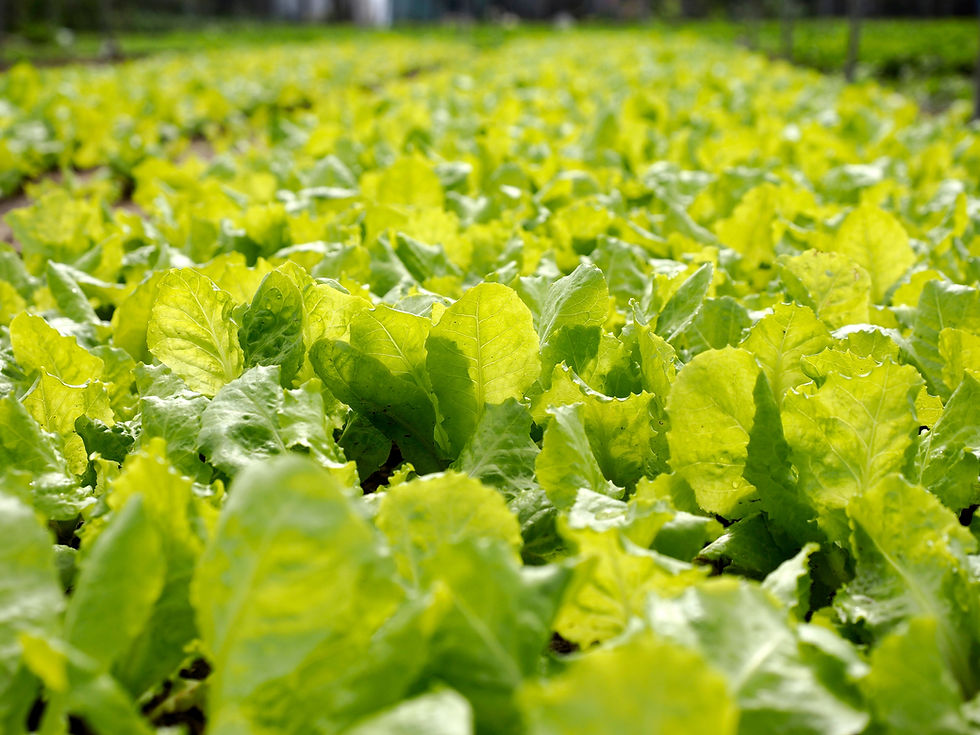
A recent independent Paul-Tech field report on Jepco lettuce gives a useful look at this. This isn’t a polished yield trial with a neat conclusion; it’s a real field comparison showing how the system actually behaves. Same field, similar starting fertility, one side with Vitaplex V8, the other without. No fertiliser applications logged, just sensors tracking what happened through the season.
So this isn’t about which one yielded more; it’s about how the system behaved.
Both sides started in roughly the same place, but from there they began to diverge. The biologically supported side held moisture far more consistently. It did tip into excess at times, but for most of the season it stayed in a workable range. The untreated side dried out much more quickly and spent far more time under drought stress.
That might not sound dramatic, but it matters more than most fertiliser decisions. Once the soil is dry, the rest of the plan is largely theoretical. You can have the best nutrition programme on paper, but if the crop can’t access it, you’re essentially just funding a very expensive experiment in disappointment.
Or put simply, nitrogen doesn’t fix a dry soil; it just gives you a greener-looking problem for a bit longer.
Where it gets more interesting is what happened with nitrate. On the untreated side, nitrate built up in the topsoil, reaching around 108 units at 8 cm depth late in the season. So not short of nitrogen, just not doing much with it either. It was effectively sat there waiting, which is never a particularly comfortable place for nitrogen to be. It either gets used or it leaves, and it’s rarely polite about either.
On the Vitaplex V8 side, surface nitrate levels were lower, around 63 units. Not because there was less nitrogen in the system, but because it wasn’t sitting still. During wetter periods it moved deeper into the profile, and at the same time the soil was actively mineralising nitrogen, in some cases adding over 50 units per week.
So the difference isn’t more versus less, it’s static versus active.
One system accumulates nitrogen near the surface and hopes the crop gets around to it. The other cycles it, moves it, and keeps supplying more as the season goes on. Neither is perfect, but they behave very differently.
And once the system becomes more active, the rules start to shift. In a low biological system, nitrogen tends to stay where you put it, which feels safe but is often inefficient. You get build-up, uneven uptake, and a fair bit left behind at the end of the season.
In a more biologically active system, supported by something like Vitaplex V8, things don’t sit still in the same way. Nutrients are moving, microbes are doing their job, and the soil is contributing more nitrogen itself through mineralisation. At that point, applying more fertiliser “just to be safe” can actually work against you.
You end up chasing a number rather than working with what the system is already doing.
The crop reflects that as well. The biologically supported side saw fewer heat-stress days and generally experienced a more stable environment. The untreated side saw more extremes, particularly on the dry side, where crops usually start to lose their sense of humour and, shortly after, their yield.
Most farmers will recognise that. Everything looks fine; you leave it thinking it’s a good crop, and a week later it’s quietly gone backwards without asking permission.
What this comparison really shows is that much of it comes back to how the soil is functioning, not just what’s been applied to it.
This isn’t about pretending fertiliser isn’t needed, or that biology replaces everything overnight. That’s not how it works. What it does show is that the soil isn’t just a place to park nutrients until the crop fancies using them.
It’s an active system, and when it’s working, inputs behave differently.
You’re not just feeding a crop at that point; you’re managing how the soil supplies it. And once you start looking at it that way, the conversation shifts. It becomes less about how much nitrogen you can throw at it, and more about how well the system is using what’s already there.
That’s usually where the gains are, not in pushing harder, but in stopping the soil from quietly working against you.
Steve Holloway
Technical Manager.
What is Vitaplex V8?
Vitaplex V8 is a carbon-based biological input designed to support soil function rather than directly feed the crop.
It’s built around vermicast extract and a readily available carbon source, which helps stimulate microbial activity in the soil. In simple terms, it gives the existing biology something to work with, rather than relying on what’s already there.
The aim isn’t to push growth in the way fertiliser does, but to improve how the soil cycles nutrients and manages moisture. As activity increases, you tend to see more consistent mineralisation, better nutrient movement, and a system that responds more evenly through the season.
It’s typically used as part of a wider programme, often alongside products like Bio-N, where the focus is on improving nitrogen efficiency rather than simply increasing application rates.
Used this way, V8 helps move the system from static to active, so more of what’s already in the soil becomes available to the crop when it’s needed.
If you’d like to see the full Paul-Tech report behind this work, just drop us an email, and we’ll send it over.


Comments