
The Field Doesn't Read the Label

Because the field gets a vote too
Written by: Steve Holloway — Technical Manager, SFS
I spend quite a lot of time talking about products, which is probably unavoidable given what I do. Biologicals, bio-stimulants, fertilise
rs, foliar feeds and whatever other category agriculture has decided something belongs in. The names are useful enough because we need some way of knowing what's in the drum and roughly what we expect it to do, but the field itself is rather less interested in any of that.
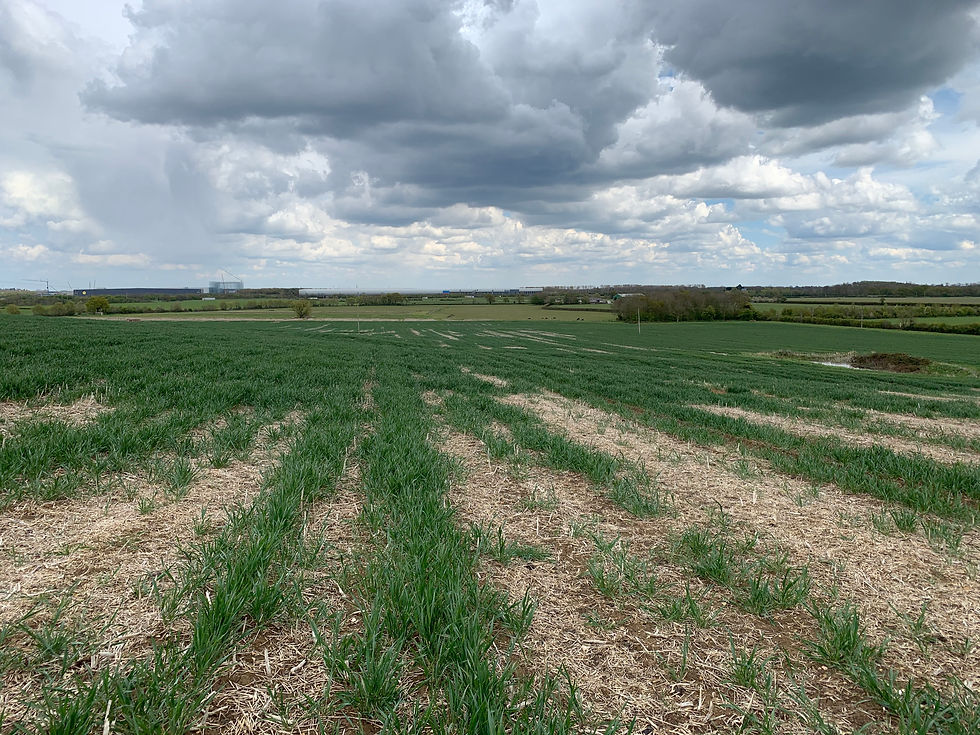
It doesn't know that something was sold for rooting, phosphorus availability, nitrogen use, or stress support. It only gets what we've applied, the soil the crop was already growing in, the weather that happened to arrive, and everything else already going on above and below the surface.
I've probably spent too much time over the years asking what a product does, when increasingly I think the better place to start is asking what I'm actually trying to influence.
Poor rooting is a fairly obvious example. Some products can encourage root development and biological activity, and I've seen enough in the field to stay interested in both. But poor rooting can also result from compaction, drainage, low oxygen, nutrient availability, pH, soil structure, or simply a wet and cold spring. Usually, just to make life more interesting, several of them have decided to turn up together.
Biological products make this particularly interesting because their mode of action can sound wonderfully straightforward when written down. A bacterium might solubilise phosphorus, fix nitrogen, produce compounds associated with root development or interact with the plant in some other useful way, and none of that is necessarily wrong. The difficulty is that an inconvenient amount of biology sits between what an organism can do and what eventually happens in a field.
Temperature and moisture matter, as do soil chemistry, the crop, timing and the environment the organism arrives in. Whether it establishes, survives, and finds something useful to do depends on conditions that don't particularly care what was written on the label.
Oddly enough, that doesn't make me less interested in biological products. It probably makes me more interested, because once we stop expecting a product to somehow overpower everything else happening in the field, we can start thinking rather more carefully about where it might earn its place.
The same is probably true of most inputs. We like categories because they make complicated things easier to talk about. Nitrogen goes in one box, phosphorus in another, biology somewhere else and soil structure occasionally gets its own meeting. The plant has the rather more difficult job of dealing with all of them at once.
Roots affect nutrient uptake, soil structure affects roots, moisture affects biology and nutrient movement, chemistry affects availability, and the weather continues to exercise its long-established right to interfere with almost everything.
Which is why, these days, I'm increasingly inclined to look at the field before I look at the product.
A label can tell me what's in the container, what it's capable of doing and hopefully how much of it I'm supposed to use. All useful information. What it can't tell me is whether this particular crop, growing in this particular soil, under whatever conditions the British weather has provided this week, actually needs it.
Unfortunately, for that we still have to go and look.
The field, after all, hasn't read the label.


Comments